
Key Takeaways
- Fake bank text messages and delivery alerts are some of the most common scams people encounter on their phones today.
- Urgent wording, unfamiliar links, and requests for personal information are the clearest signs of a scam text.
- A text claiming your package couldn’t be delivered is often just as suspicious as one claiming your bank account was locked.
- Verifying a message directly through an official app or a trusted phone number is always safer than clicking a link.
It starts with a buzz on your phone. “Your account has been locked.” “Your package couldn’t be delivered.” “Suspicious activity detected.” These days, fake bank text messages and other scam alerts show up so often that it’s easy to see why so many people fall for them. Texting is cheap and instant, which makes it the perfect tool for scammers looking to reach thousands of people at once while pretending to be an organization you already trust.
Why These Texts Feel So Real
Scammers don’t need to guess who your bank is. They just send the same message to enough people that some percentage will actually match, and use real logos, familiar language, and even links that look almost identical to legitimate websites. If a text arrives right after you’ve made an online purchase or you’re expecting a delivery, the timing alone can make it feel legitimate. Add a little fear or urgency, and careful thinking tends to go out the window.
Common Formats to Watch For
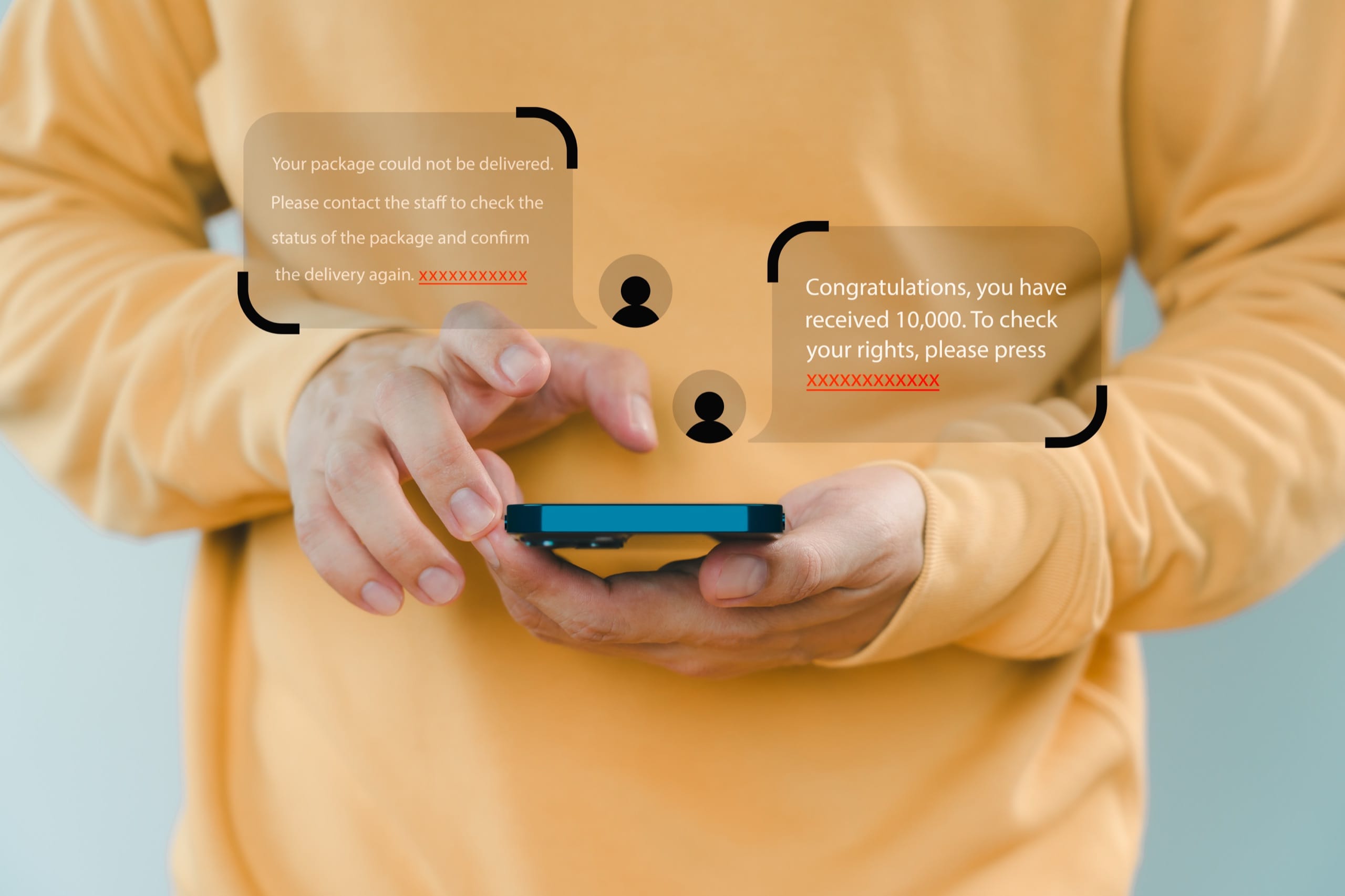
Smishing is just phishing that arrives by text instead of email, and it’s becoming one of the most common ways scammers reach people. Among the examples of smishing scams we see most often are messages claiming your bank account has been locked, alerts about “suspicious activity” on a card, and notices about a prize, refund, or gift card you supposedly won. A fake post office text is another frequent one. It usually says a package couldn’t be delivered and asks you to click a link or pay a small fee to reschedule, even if you weren’t expecting anything.
How to Spot a Scam Text
Knowing how to spot a scam text gets easier once you recognize the pattern. Watch for:
- Urgent or threatening wording meant to rush you into acting
- A link to click or a number to call immediately
- Misspellings, odd phrasing, or a generic greeting like “Dear Customer”
- A sender number that looks unfamiliar or doesn’t match past messages
- Any request for a password, account number, or Social Security number
Legitimate banks and delivery services rarely ask for sensitive details over text, and that alone is often the clearest red flag.
What to Do If You Get One
Don’t click the link or call the number in the text. Instead, open your bank’s app directly or visit the company’s real website on your own. You can also call customer service using a number from a statement or the back of your card, not one included in the message. Delete the text or report it as spam, and skip the temptation to reply “STOP,” since that just confirms your number is active.
If You’ve Already Clicked
Don’t panic, but don’t wait either. Contact your bank or card provider right away, change the password for any account that may be affected, and keep an eye on your statements for unusual charges over the next few weeks. Taking action early makes a real difference.
A Quick Checklist Before You Respond
Before acting on any text, ask yourself: Was I expecting this message? Does it sound urgent or threatening? Does it include a link or phone number? Is it asking for personal information? If you answered yes to more than one, it’s worth verifying independently before doing anything else. Scam formats extend well beyond text messages too, as we cover in how to identify and avoid common cell phone scams.
Staying a Step Ahead
Phishing scams through text messages aren’t going away, but a little skepticism goes a long way. Enable spam filtering where your phone allows it, be cautious with unfamiliar numbers, and talk with family members about texts you’ve seen so everyone stays informed. Reviewing your app permissions and using strong, unique passwords also make it harder for scammers to do damage if they ever do get through.
At Affinity Cellular, we want every customer to feel confident using their phone, scam texts included. Reach out to our support team anytime you’re unsure about a message, or explore our no-contract plans built around simplicity and trust.